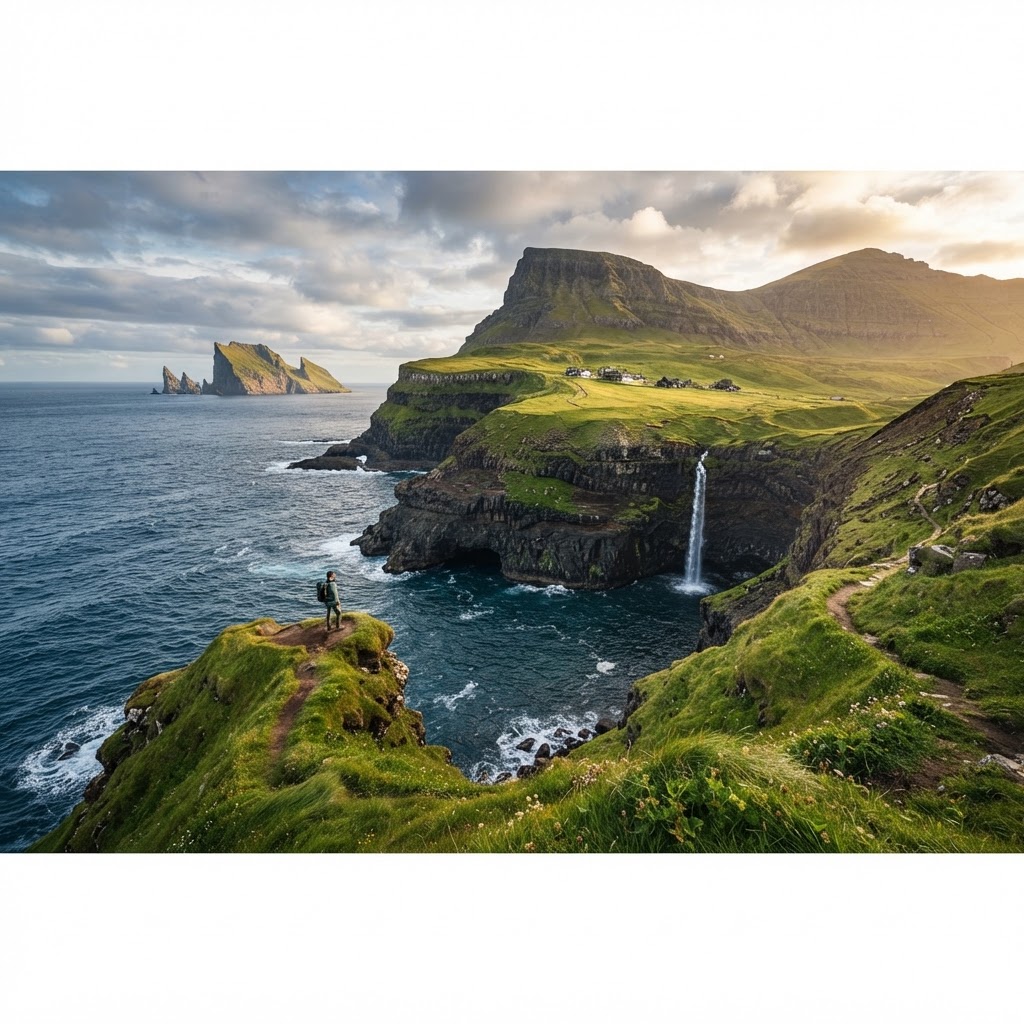
Faroe Islands: Exploring the Dramatic Landscapes of the North
Discover the raw, untamed beauty of the Faroe Islands, a remote North Atlantic archipelago where steep cliffs, cascading waterfalls, and emerald landscapes await the intrepid traveler. This guide covers everything you need to know for a journey to the edge of the world.
Overview: Why Visit the Faroe Islands?
Tucked away between Iceland and Norway, the Faroe Islands are a cluster of eighteen volcanic outcrops that feel like the setting of an ancient Norse myth. Far removed from the crowded tourist trails of mainland Europe, this autonomous territory of Denmark offers a sensory experience unlike any other. Here, nature dictates the pace of life. You will find grass-roofed cottages, sheep that outnumber humans, and sheer sea cliffs that plunge dramatically into the churning North Atlantic. For those seeking solitude, majestic landscapes, and a profound connection with the wild, the Faroes are a dream destination.
Top Things To Do
Whether you are an avid hiker or a photographer looking for the perfect frame, the islands are packed with unforgettable experiences.
- Hike to Múlafossur Waterfall: Located in the tiny village of Gásadalur, this iconic waterfall drops directly into the ocean and is perhaps the most famous postcard image of the archipelago.
- Boat Trip to Vestmanna Sea Cliffs: Witness the sheer scale of the bird cliffs from the water, where you can sail through narrow sounds and dark sea caves.
- Visit the Village of Saksun: Nestled in a natural amphitheater, this village features a tidal lagoon and traditional houses with sod roofs that blend perfectly into the mountainous terrain.
- **Explore Tórshavn:** Spend time in one of the world's smallest and most charming capitals, walking through the narrow lanes of the Tinganes historic district.
- Climb to Kallur Lighthouse: Located on Kalsoy island, this hike offers perhaps the most spectacular panoramic view in the entire island group, looking out over the neighboring islands.
Best Time to Visit and Practical Tips
The best time to visit the Faroe Islands is during the summer months from June to August. During this period, the days are long, the weather is mild (though still unpredictable), and the puffins are nesting. If you visit in winter, expect dark, moody skies and very limited daylight, which offers its own rugged appeal but makes outdoor exploration difficult. When packing, think layers. The Faroese often say you can experience all four seasons in one day, so waterproof gear is non-negotiable. Additionally, renting a car is the most efficient way to navigate the islands, as the network of undersea tunnels makes traveling between the major islands remarkably smooth.
Why Book with Fanous Travel
Planning a trip to such a remote destination can be daunting, from managing ferry schedules to securing accommodation in small, isolated villages. At Fanous Travel, we specialize in curating off-the-beaten-path itineraries that ensure you experience the authentic culture and natural wonders of the region without the stress of logistics. Our local experts handle the intricacies so you can focus on the view. Visit https://fanous.travel to explore our custom packages and start your journey to the North.
Frequently Asked Questions
Do I need a visa for the Faroe Islands?
The Faroe Islands are not part of the Schengen Area. Depending on your nationality, you may need a separate visa to enter the islands, even if you are visiting from Denmark.
Is it expensive to travel in the Faroe Islands?
Yes, the Faroe Islands are considered a high-cost destination due to the necessity of importing most goods. However, the experience of nature remains free and accessible to all who travel respectfully.
How do I get around the islands?
Renting a car is recommended. Public buses and ferries are available, but they are more suited to local transport than flexible tourism.
The Faroe Islands represent a rare corner of the globe where nature remains the protagonist. A journey here is more than a holiday; it is an immersion into a landscape that demands respect and rewards the curious with unparalleled beauty.