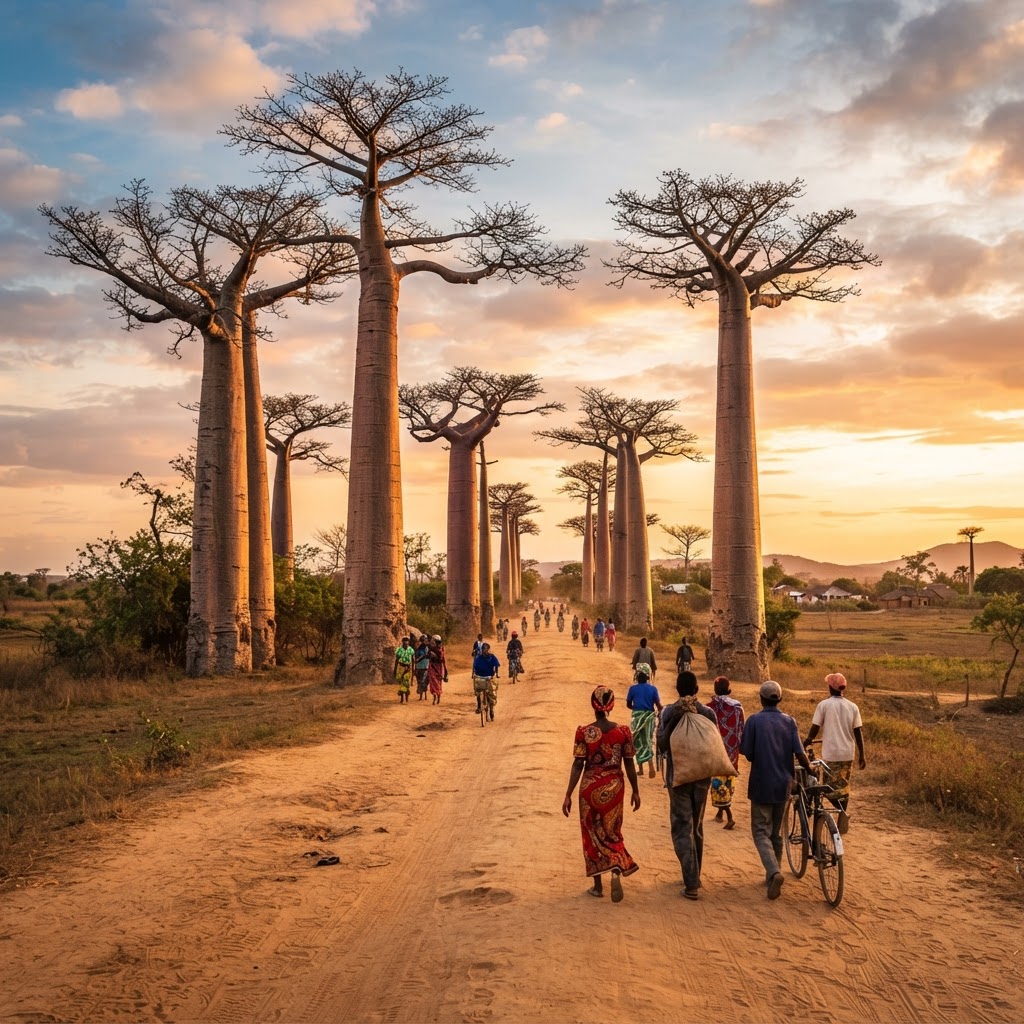
Madagascar: Discovering the World's Living Laboratory
Journey to the unique island of Madagascar, a place where evolution took a different path. From surreal baobab forests to rare lemurs, discover why this biological marvel belongs on your bucket list.
Overview: The Eighth Continent
Often referred to as the eighth continent, Madagascar is unlike anywhere else on Earth. Isolated for over 80 million years, nearly 90 percent of its flora and fauna are endemic, meaning they exist nowhere else in the world. For the adventurous traveler, Madagascar is not just a destination; it is a deep dive into an evolutionary wonderland that challenges the imagination at every turn.
Top Things To Do
Whether you are a wildlife enthusiast, a beach lover, or a fan of strange geology, Madagascar offers unparalleled experiences:
- Walk the Avenue of the Baobabs: Witness the ancient, towering trees that create one of the most iconic silhouettes in Africa, especially breathtaking at sunset.
- Explore Tsingy de Bemaraha: Navigate the limestone forest of needle-like spires, a UNESCO World Heritage site that offers an otherworldly trekking experience.
- Spot Lemurs in Andasibe-Mantadia: Trek through dense tropical rainforests to catch a glimpse of the Indri, the largest lemur species, known for their haunting, whale-like calls.
- Relax on Nosy Be: Unwind on the pristine white sand beaches of this volcanic island, famous for its coral reefs, diving spots, and tranquil turquoise waters.
- Visit the Royal Hill of Ambohimanga: Delve into the cultural heart of the island by exploring this sacred site, which offers deep insights into Malagasy history and tradition.
Best Time to Visit & Practical Tips
The best time to visit Madagascar is during the dry season, which runs from April to October. During these months, the weather is mild, making it ideal for trekking through national parks and exploring the coast. If you are interested in whale watching, plan your trip between July and September, when humpback whales migrate through the waters of Sainte-Marie Island.
Practical Tips: Madagascar is a destination for the flexible traveler. Roads can be challenging, so consider internal flights or hiring a reputable local guide with a 4x4 vehicle. Always pack sturdy hiking boots, malaria prophylaxis, and high-quality sun protection.
Why Book with Fanous Travel
Navigating the logistics of a vast, complex island like Madagascar requires expert local knowledge. At Fanous Travel, we specialize in crafting bespoke itineraries that balance wild adventure with comfort. Our team handles the intricate details of permits, internal logistics, and hand-picked accommodations, ensuring your journey is as seamless as it is memorable. Book your expedition today and let us bring you closer to the heart of this unique island.
Frequently Asked Questions
Do I need a visa for Madagascar?
Most travelers require a visa, which can usually be obtained upon arrival at the airport or through an online e-visa portal prior to departure. Always check current regulations before booking.
Is it safe to travel in Madagascar?
Madagascar is generally safe for tourists, provided you stick to established travel routes and use reputable tour operators. We recommend avoiding travel after dark in remote areas.
What is the currency of Madagascar?
The currency is the Malagasy Ariary. While some luxury hotels accept Euros or US Dollars, it is essential to carry local cash for daily expenses and rural markets.
Madagascar is a destination that changes you. From the quirky face of a lemur to the stark beauty of its red-earth landscapes, the island promises an adventure that feels genuinely disconnected from the modern hum of the world. Start planning your Malagasy journey today.